
The Pattern Behind One-Sided Back Pain
Ever notice it’s always the same side?
You’re back into training and you notice that subtle pull around your lower back. Or you may have been sitting more than usual and notice that familiar tightness creeping in?
It’s nothing major… just enough to notice.
Sound like you? You may be:
A Runner.
A Mum carrying kids on one hip.
A Golfer working on their swing.
Or A Desk worker sitting unevenly.
It’s rarely random. I see this pattern frequently here at Alignment Chiropractic - Milsons Point.
What’s actually happening
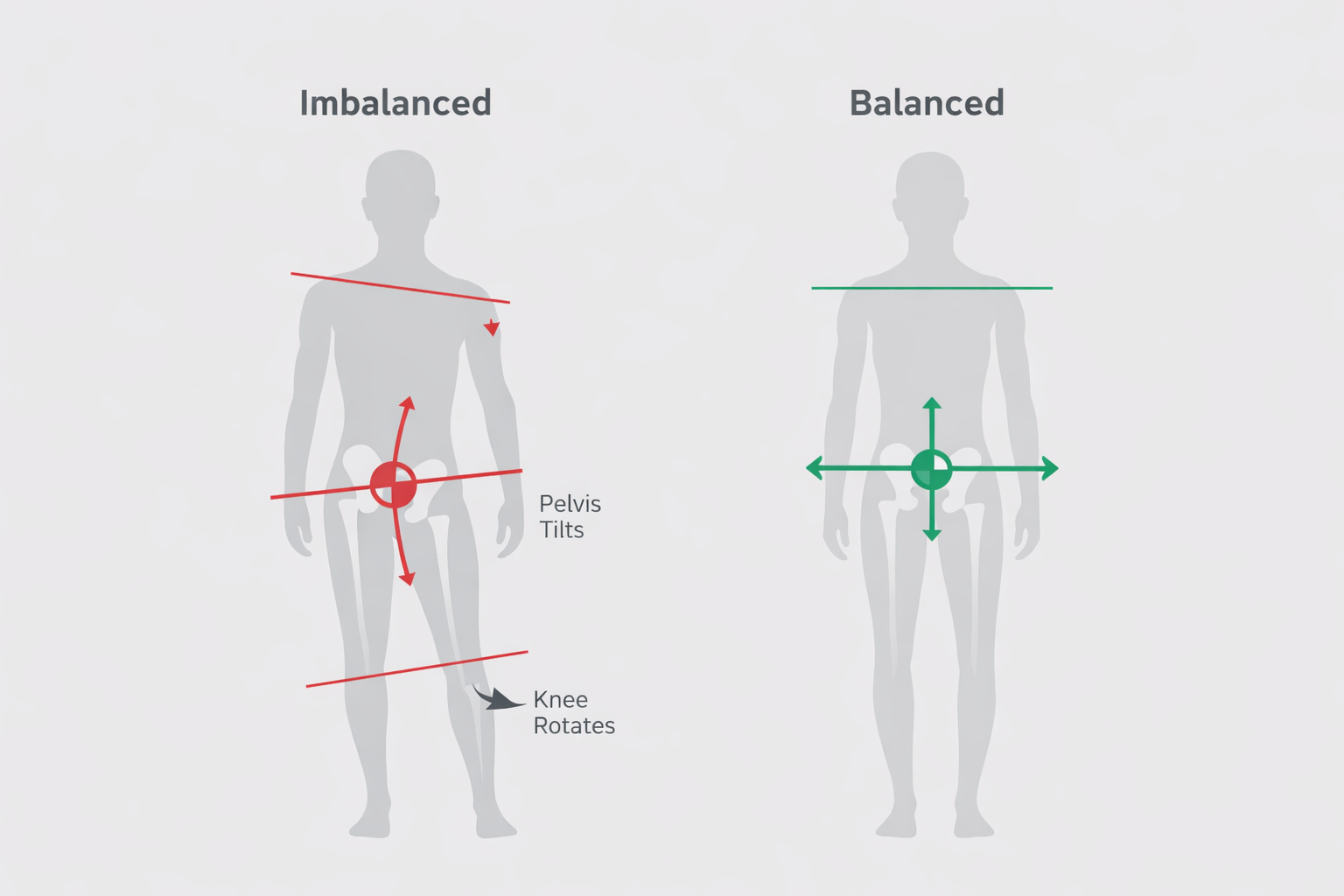
Your pelvis is designed to share load evenly between both sides.
But over time:
One side becomes more dominant
The other becomes restricted or overloaded
Your body adapts quietly
Until it doesn’t.
That “niggle” is often the first signal that your body is no longer distributing load properly.
Why it shows up one-sided
This is where your lifestyle shapes the pattern:
Runners: subtle stride differences or road camber
Mums: consistently carrying on one side
Golfers: repeated rotation in one direction
Desk workers: leaning, crossing legs, uneven setups
These habits seem small…
…but repeated daily, they become your default.
And your SI joint — right at the centre of load transfer — feels it first.
The common trap
Most people try to fix the sore side:
Stretch it
Roll it
Massage it
It might feel better temporarily … but it doesn’t change the underlying pattern.
That’s why it keeps coming back.
Instead of chasing symptoms, the focus needs to shift to:
Restoring balance through the pelvis
Improving how load moves through your spine
Addressing the underlying asymmetry
When your body is moving well and sharing load properly…
The irritation settles naturally.
A simple 5-minute reset you can try at home
If you’re noticing a one-sided ache, here’s a quick way to both assess and start improving balance.
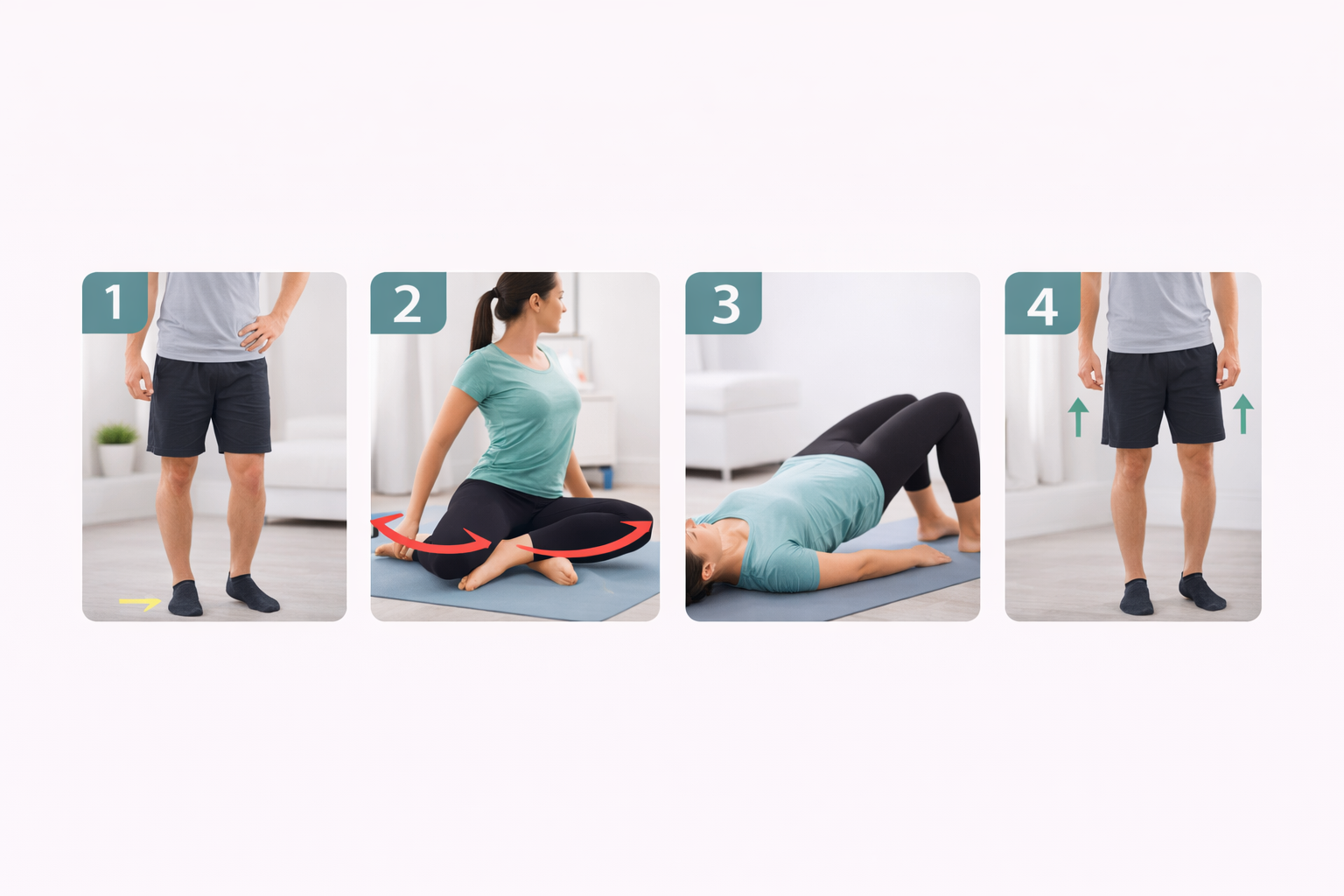
1. Standing Weight Shift Check (30 seconds)
Stand naturally and notice:
Do you feel heavier on one side?
Does one hip sit higher or tighter?
👉 This is often your starting point.
2. 90/90 Hip Reset (1–2 minutes)
Sit in a 90/90 position
Gently rotate side to side
Notice if one side feels tighter or restricted
👉 This helps restore hip movement and exposes asymmetry
3. Glute Bridge (1–2 minutes)
Feet flat, hip-width apart
Push evenly through both legs
Slow, controlled reps (10–15)
👉 Focus: does one side fire more than the other?
4. Re-check Standing (30 seconds)
Stand up again.
👉 Do you feel more even?
That small shift is a good sign your body is responding.
Important
This isn’t about “fixing” everything in 5 minutes.
It’s about:
Creating awareness
Improving balance
Catching issues early
If you notice:
A clear difference between sides
One side consistently tighter or weaker
Symptoms returning quickly
That’s your signal that something deeper needs addressing.
Final thought
If you’ve been dealing with a one-sided lower back or hip issue that keeps returning…
It’s worth getting it assessed properly.
Fix the cause — not just the symptoms.
- Dr Ruby-Jane Lacey (Chiropractor)